
Daniel Kahneman’s book “Thinking, Fast and Slow” shook up how we look at human decision-making. Like any big scientific work, it brings both sharp insights and some glaring flaws.
The Nobel Prize-winning psychologist introduced readers to the idea of two ways of thinking. System 1 runs fast and on instinct, while System 2 moves slowly and takes its time.

Kahneman nailed the big picture about cognitive biases and human judgment, but some studies he used in the book later failed to replicate during psychology’s reproducibility crisis. The book relied on some questionable research in social priming. Oddly enough, Kahneman himself had warned about these issues in his earlier work on sample sizes and statistical mistakes.
Even with these problems, the main ideas still help explain why people make the same thinking mistakes over and over. Kahneman’s work at Princeton University keeps shaping economics and public policy. Researchers are still testing and tweaking his theories.
Key Takeaways
- We think with two systems: one fast and intuitive, the other slow and careful.
- Cognitive biases push us into making predictable mistakes.
- Some studies in the book didn’t hold up, but the main principles still stand.
Dual-Process Theory: System 1 and System 2 Explained
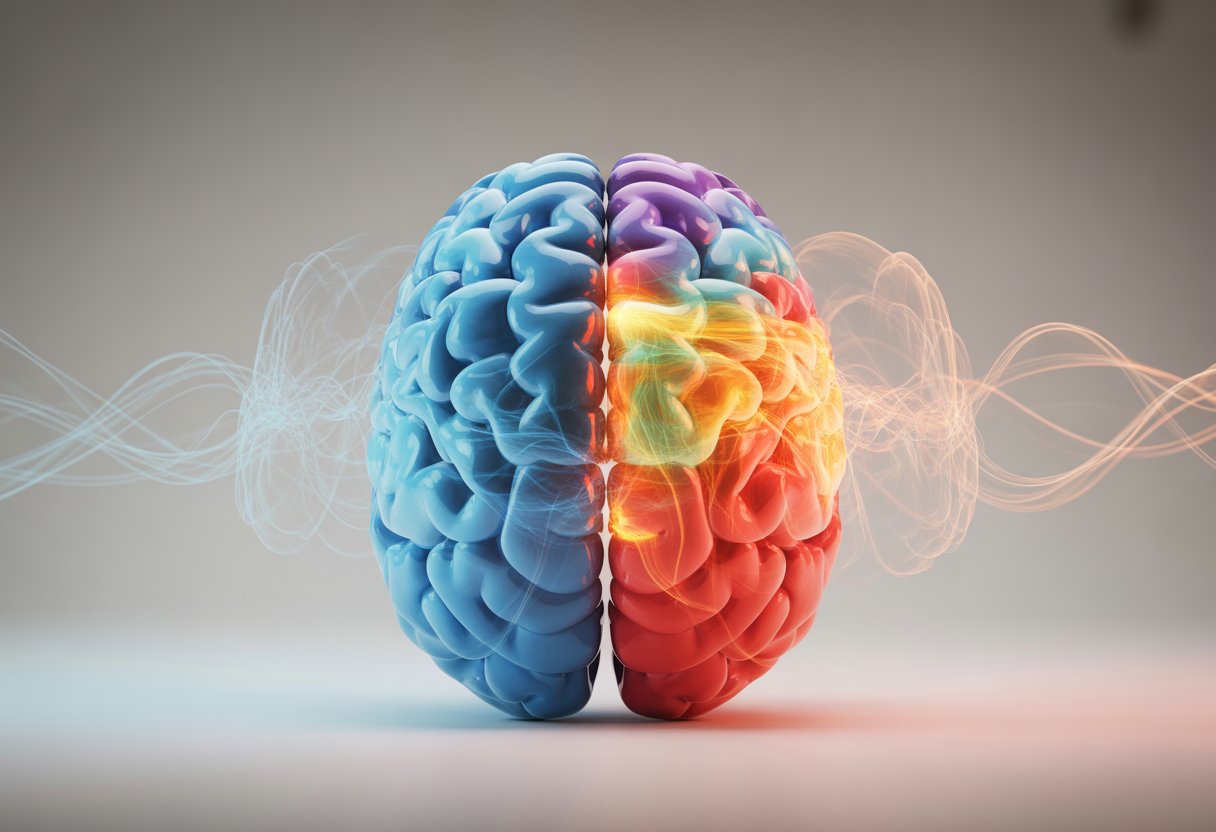
Daniel Kahneman’s dual-process model splits our thinking into two modes. System 1 kicks in fast and runs on autopilot, while System 2 steps in for tough problems and needs focus.
System 1 handles quick, automatic responses using mental shortcuts. System 2 gets involved when we need to analyze or reason through something complex.
Automatic Thinking: Key Features of System 1
System 1 works without us even trying. This fast, gut-level system sorts through information in a flash and gives us instant impressions.
Key characteristics of System 1:
- Speed: Answers pop up instantly
- Effort: Uses almost no energy
- Control: Runs automatically
- Emotions: Feelings shape its responses
System 1 recognizes faces the moment you see someone familiar. It picks up anger in a voice before you catch the words. Reading simple text? That’s System 1 at work, too.
This system leans on patterns and past associations. You hear “bread and…” and probably think “butter” right away. That’s your mind connecting the dots from experience.
System 1 fills in blanks with assumptions, building stories from just a little info. These snap judgments are often right, but sometimes they steer us wrong.
Analytical Thinking: How System 2 Works
System 2 thinking needs your attention and effort. It’s the part that handles math, logic, and choices that take real thought.
System 2 kicks in when you:
| Task Type | Example |
|---|---|
| Mathematical problems | Calculating 17 x 24 |
| Rule following | Checking grammar in writing |
| Comparisons | Evaluating multiple job offers |
| Attention control | Focusing in noisy environments |
System 2 can step in and override System 1. Say you really want dessert but pass it up anyway—System 2 is calling the shots. That kind of self-control burns up your mental energy.
This system can’t do everything at once. If you’re already working hard on something, your System 2 slows down and you get more impulsive.
Most of the time, System 2 just goes along with System 1’s suggestions. We make tons of choices on autopilot, barely checking in with our analytical side.
The Law of Least Effort and Mental Shortcuts
The brain tries to save energy by using System 1 whenever it can. This law of least effort is why we gravitate toward easy mental tasks.
Common mental shortcuts:
- Availability heuristic: Judge by what comes to mind quickly
- Representativeness: Sort things by how much they fit a stereotype
- Anchoring: Rely on the first bit of info you hear
- Confirmation bias: Look for stuff that backs up what you already think
These shortcuts work great in familiar situations. An experienced doctor might spot symptoms in seconds. But when things get tricky or statistical, the shortcuts can trip us up.
System 1 swaps hard questions for easier ones without us noticing. If someone asks, “How happy are you with your life?” you might just answer based on your mood right now. It happens automatically.
Mental effort isn’t exactly fun. Most people pick simple tasks, even if tougher ones would pay off more. That shapes how we make decisions every day, whether we realize it or not.
Heuristics, Cognitive Biases, and Errors
Kahneman showed how our brain’s shortcuts—heuristics—lead to predictable mistakes. These patterns make life easier but skew our judgment, especially when familiar info feels more convincing than statistics.
Common Heuristics: Availability, Representativeness, and Affect
The availability heuristic messes with how we see risk. If something pops into your mind easily, it seems more likely. Plane crashes get overestimated, strokes get ignored.
This explains why insurance sales jump after disasters. Recent floods or earthquakes make those risks feel real and close.
The representativeness heuristic makes us judge odds by how much something matches our mental categories. In Kahneman’s “Tom W” study, people ignored the actual stats and just focused on personality stereotypes.
The affect heuristic ties our feelings right to risk. If a technology feels helpful, we see it as safer. If it feels scary, we see it as dangerous.
Heuristic patterns to watch for:
- Availability: Recent events seem more likely
- Representativeness: Similarity feels like probability
- Affect: Good vibes mean low risk
Understanding Biases and Their Impact
Anchoring happens when the first number you hear shapes your final guess, even if it’s random. Real estate agents shift prices based on listings. Judges’ sentences change based on starting points.
Confirmation bias makes us hunt for info that fits what we already believe. We dodge or twist evidence that doesn’t fit.
The conjunction fallacy shows how detailed stories can seem more likely than simpler ones. “Linda is a feminist bank teller” sounds more probable than “Linda is a bank teller,” even though that’s not possible mathematically.
These biases can mess with decisions at work. Investing, diagnosing, or judging in court—errors creep in everywhere.
Bias effects you might notice:
- Getting overconfident with small samples
- Ignoring the real odds (base rates)
- Favoring stories over stats
Cognitive Ease and the Mere Exposure Effect
Cognitive ease pops up when things feel familiar and simple to process. If you’ve seen something before, it just feels truer.
The mere exposure effect makes us trust things we’ve heard or seen a lot. Even stocks with easy names do better at first than ones with tricky spellings.
Simple fonts and clear words boost cognitive ease. People rate statements as more believable if they’re easy to read, even when the content’s the same.
What makes something cognitively easy?
- Repetition: If you’ve heard it, it feels true
- Clarity: Easy reading means more trust
- Simplicity: Simple explanations just seem right
This bias shapes everything from politics to shopping. Familiar brands feel safer, and repeated claims sound more factual—even when they’re not.
Politicians with recognizable names get a boost from the mere exposure effect. Voters often just pick the name they know.
Decision Making and Judgment Under Uncertainty
Kahneman dug into how we make choices when we don’t have all the facts. He found three big habits: we swap hard questions for easy ones, get pulled by anchor numbers, and ignore odds while misunderstanding how things regress to the mean.
The Role of Substitution in Decisions
Substitution happens when we swap a tough question for an easier one—without realizing it. System 1 does this on autopilot.
Ask someone, “How happy are you with your life?” and they’ll probably answer based on their current mood. It’s just easier. This shortcut leads to predictable mistakes.
This works through attribute substitution. We latch onto whatever info comes to mind quickest and use that to answer the original question.
Common substitution moves:
- Using similarity instead of real probability
- Letting availability replace actual frequency
- Picking what’s familiar over what’s complex
- Swapping statistics for stereotypes
That’s why expert predictions often flop. People trust their gut confidence more than real accuracy.
Anchoring and the Anchoring Effect
The anchoring effect shows up when the first number you hear drags your estimate closer—even if it’s random.
In those classic studies, people spun a wheel before guessing the number of African countries in the UN. Higher wheel numbers led to higher guesses. The anchor worked, even though it made no sense.
Anchoring crops up in real life:
- Salary talks start with that first offer
- Home prices shift based on the listing
- Judges’ sentences move with prosecutor recommendations
- Retailers use “manufacturer’s suggested prices” to set expectations
Anchoring works by making certain values easier to think about. People adjust from the anchor, but not nearly enough.
Anchors hit hardest when:
- The number is extreme
- It’s oddly specific
- You come up with it yourself
- There are several anchors at once
Base Rate Neglect and Regression to the Mean
Base rate neglect pops up when people ignore statistical background information. They zoom in on specific details and lose sight of broader probability patterns.
The classic taxi problem really shows this bias in action. Most folks overlook the base rate of taxi colors in a city, trusting only a witness’s reliability when identifying accident vehicles.
Research on heuristics and biases has shown this pattern over and over. People tend to use representativeness instead of actual probability calculations.
Regression to the mean is about how extreme measurements drift toward average values over time. Kahneman noticed that people often misunderstand this basic statistical idea.
For example, students who ace one test usually score lower on the next. It’s just normal statistical variation—not some sudden drop in ability.
- Attributing natural variation to interventions
- Expecting consistent extreme performance
- Creating false causal explanations for normal patterns
- Misinterpreting treatment effectiveness in studies
Judgment errors like these happen because our gut instincts clash with actual statistics. System 1 spins up stories that feel right, but math tells a different tale.
Expert Intuition Versus Gut Feeling
Kahneman drew a line between real expert intuition and everyday gut feelings. He looked at the conditions needed for intuition to be reliable. Expert intuition develops in specific environments with regular patterns, tons of practice, and immediate feedback. Gut feelings, on the other hand, usually skip those steps.
Distinguishing Real Expertise
Real expertise only grows under three conditions that most people just don’t have. The environment has to be predictable with patterns that stick around.
The expert needs a mountain of practice—we’re talking thousands of hours. They also need quick, accurate feedback about their decisions.
Kahneman calls intuition recognition, not some magical insight. When experts see familiar situations, their brains match patterns from past experience in a flash.
This happens below the surface. The expert “just knows” the answer, even if they can’t spell out why.
- Stable, predictable environment
- 10,000+ hours of deliberate practice
- Immediate, accurate feedback on performance
Most daily situations don’t meet these standards. That’s why gut feelings can lead us off-track in complicated, unpredictable settings.
Chess Masters and the Nature of Intuitive Skills
Chess masters are a perfect example of how real expert intuition works. Grandmasters come up with a strong move within five seconds, and most of the time, their first reaction is also their final choice.
Even under time pressure, grandmasters keep playing at a high level. They can do this because they recognize thousands of board patterns in a heartbeat.
Their skill comes from picking up on specific cues right away. When they see certain piece arrangements, they just know which strategies fit best.
- Fixed rules that never change
- Immediate feedback after each move
- Thousands of hours of practice against skilled opponents
The chess world stays stable over decades. A tactic that worked fifty years ago still works now.
This stability lets masters build up reliable gut instincts. Their “feelings” about moves actually come from deep pattern recognition, not random guesses.
The Work of Gary Klein and Paul Slovic
Gary Klein studied expert intuition in high-stakes jobs like firefighting and military command. He found that experienced pros often make great snap decisions in their fields.
Klein saw that experts recognize situations they’ve seen before. They don’t sit there analyzing a bunch of options like textbooks say they should.
Instead, they quickly spot the type of situation and use proven solutions. This is called recognition-primed decision making, and it explains why experts perform so well under pressure.
Paul Slovic took a different angle and looked at when expert judgment falls apart. He found that a lot of so-called experts do no better than chance.
Slovic noticed that confidence often outruns accuracy. Stock analysts, clinical psychologists, and political pundits are often sure of themselves—even when their predictions flop.
Feedback is the big difference. Firefighters know right away if their decisions go wrong—buildings burn or people get hurt.
Stock analysts almost never get clear, quick feedback about why their calls missed the mark. Without feedback, they can’t build real expertise, even after years on the job.
Prospect Theory, Utility, and Loss Aversion
Prospect theory turned economics upside down by showing how people actually make risky decisions. It challenged the old idea that humans are perfectly rational. Turns out, we feel losses more than gains, and the way choices are framed totally changes our decisions.
Challenging Classic Economic Theories
Old-school utility theory said people act rationally to maximize wealth or happiness. Kahneman and Tversky came up with prospect theory in 1979 as a new way to explain real behavior.
Their theory grew out of experiments that showed people don’t weigh gains and losses equally. Classic economics just didn’t match human behavior.
- People judge outcomes by comparing them to a reference point, not absolute wealth
- Losses sting more than equivalent gains feel good
- People overrate small odds and underrate big ones
For instance, most folks pick a sure $450 over a coin flip for $1,000. But if it’s about losing money, they’ll risk a 50% shot at losing $1,100 rather than accept a sure $500 loss. That’s not what utility theory predicts, but it’s what people do.
The Principle of Loss Aversion
Loss aversion means losing hurts more than winning feels good. Some studies say losing $1,000 needs a win of $2,000 to balance out emotionally.
This creates patterns we see every day. When gains are on the line, people play it safe. If losses loom, they’ll take bigger risks to dodge them.
- Homeowners won’t sell at a loss, even when it makes sense
- Investors hang onto losing stocks too long and dump winners too fast
- People hate price hikes more than they love discounts
This effect is powerful enough to shape whole markets. Companies use loss aversion in ads by highlighting what you might lose, not just what you could gain.
Framing Effect in Choices
The framing effect shows that the way choices are worded changes decisions, even if the math is the same. Whether options are described as gains or losses flips people’s risk preferences.
Take two scenarios with identical odds. Hearing “90% of patients survive this surgery” feels better than “10% die from this surgery.” Same numbers, different reactions.
- Ground beef labeled “75% lean” vs. “25% fat”
- Job cuts described as “retaining 80% of staff” vs. “cutting 20%”
- Investment returns as “gained $500” vs. “avoided losing $500”
This bias sneaks into business, medicine, and policy decisions. The fourfold pattern of risk attitudes comes from how framing and probability weighting mix, leading to some pretty odd but consistent choices across different situations.
Critiques and Limitations of Kahneman’s Model
Kahneman’s dual-system theory is popular, but it’s not without controversy. Some of the studies he cites have struggled to replicate. Critics also debate whether his take on rationality matches how people actually make good decisions.
Criticisms from Statisticians and Psychologists
The replication crisis in psychology has hit Kahneman’s work hard. Many classic experiments from his years with Amos Tversky don’t hold up in new studies.
Some results in Kahneman’s book score badly on replicability. It’s not all on him—psychology just has some big research problems.
Statisticians also challenge the strict split between System 1 and System 2. Some say this divide oversimplifies how our minds really work.
Others ask if cognitive biases are really mistakes. Maybe these shortcuts evolved because they usually work pretty well in real life.
The Debate Over Rationality
Kahneman paints System 2 thinking as the rational one, but is it always better? Some critics aren’t so sure.
Some argue that System 2 might just help us explain decisions we’ve already made fast. People could be using slow thinking to justify what their gut already decided.
Defining rationality is tricky. Economists’ version of rational behavior often falls apart in the messy real world, where time and info are limited.
- System 2 may just justify decisions, not improve them
- Perfect rationality isn’t possible in real life
- Fast decisions sometimes beat slow, careful ones
Real-World Applications and Political Implications
Kahneman’s ideas have shaped public policy, but not always for the better. Governments use his research to build “nudges” that push people in certain directions.
Some critics think this treats people like flawed thinkers who need experts to guide them. It can turn into paternalistic policies that shrink individual choice.
In security, like counter-terrorism, focusing on cognitive biases might miss the bigger picture. What Kahneman calls irrational fear could actually be a reasonable response to rare but serious threats.
The model also doesn’t always fit in high-pressure jobs. Traders, doctors, and first responders often make great split-second calls—slowing down for System 2 might just get in the way.
- May support limiting personal choices
- Overlooks times when fast thinking works best
- Can oversimplify complicated social or political issues
Frequently Asked Questions
Daniel Kahneman’s research brought dual-process theory, cognitive biases, and prospect theory into mainstream psychology. He won the 2002 Nobel Prize in Economic Sciences and totally changed how we think about decision-making.
What are the key concepts presented in ‘Thinking, Fast and Slow’?
The book focuses on two mental systems that steer our thinking. System 1 works quickly and automatically, while System 2 is slow and effortful.
System 1 handles things like reading faces or driving familiar roads. It leans on intuition and emotion for snap decisions.
System 2 steps in for tough problems—like solving math or learning new skills. This system uses logic and careful analysis.
Kahneman explains how cognitive biases trip up both systems. The anchoring effect makes people stick to the first info they hear. Loss aversion means losses feel worse than gains feel good.
Overconfidence bias leads people to think they know more than they do. These shortcuts help us make fast choices but can easily cause mistakes.
How has Daniel Kahneman’s work influenced behavioral economics?
Kahneman’s research took a swing at traditional economic theories that assumed people always act rationally. He argued that emotions and mental shortcuts play a huge role in financial choices.
His work on prospect theory shed light on why people make odd choices about money. Folks usually avoid risks when they stand to gain, but they’ll chase risks to dodge losses.
This line of research helped kickstart behavioral economics. The field blends psychology and economic theory to get a clearer picture of real human behavior in markets.
Banks and investment firms lean on Kahneman’s insights to shape better products. Governments also use his findings to craft smarter public policies.
Which Nobel Prize did Daniel Kahneman win, and for what contribution?
Kahneman won the 2002 Nobel Prize in Economic Sciences. The committee cited his work on prospect theory and behavioral economics.
The Nobel Committee highlighted his research on how people make judgments under uncertainty. His studies showed that people often make systematic mistakes when judging probabilities and making financial choices.
Kahneman became the first psychologist to snag the economics Nobel. His award showed that psychological research could totally reshape how we understand economics.
Can you describe the two-system approach proposed by Kahneman in his book?
Kahneman’s dual-system model splits thinking into System 1 and System 2. System 1 works automatically and barely needs any effort. System 2, on the other hand, needs focus and conscious thought.
System 1 deals with patterns and routine tasks. It’s fast but relies on shortcuts, which can trip people up.
System 2 jumps in when a problem needs careful thinking. It checks System 1’s snap judgments and handles tougher reasoning.
The two systems usually work together, but not always smoothly. System 1 might leap to conclusions while System 2 just sits back, maybe out of laziness or habit.
If people understand both systems, they can spot moments when it’s better to pause and think things through. This can definitely lead to smarter decisions when it matters.
What impact did ‘Thinking, Fast and Slow’ have on psychological study and application?
The book made cognitive psychology ideas accessible to way more people. Researchers found new ways to study how we make choices and process information.
Universities started weaving dual-process theory into their classes. Psychology programs now routinely discuss System 1 and System 2 thinking.
Mental health professionals use Kahneman’s ideas to help clients spot their own thinking traps. Therapists bring these concepts into sessions to boost results.
Business schools picked up the book’s ideas for management and marketing. Companies now train staff to notice and sidestep decision-making biases.
Public policy also felt the impact. Governments tap into behavioral insights to design smarter programs and regulations.
How does regret theory play into Kahneman’s broader research and conclusions?
Regret theory digs into how people let the fear of future regret shape their decisions. Instead of always chasing the biggest reward, folks often pick the path that seems least likely to haunt them later.
This idea ties right into loss aversion from Kahneman’s research. Most of us dread losing what we already have even more than missing out on new gains.
Ever notice how people sometimes hold onto bad investments way too long? They’re trying to dodge the sting of regret that comes with admitting a loss, even if selling would be smarter.
There’s also this weird comfort in doing nothing when things feel uncertain. For many, inaction just feels safer than making a call that could backfire.
Kahneman looks at how regret sneaks into everything, from what jobs we take to what we buy. It’s honestly eye-opening—understanding regret can really help us make better choices, though that’s easier said than done.