
We live in a world where information comes at us from all directions. Every day you see news stories, social media posts, advertisements, and opinions from friends and family.
Some of this information helps you make good choices. But some of it can mislead you or just waste your time.
Before you accept any claim as true, you need to ask yourself specific questions that help you think clearly and avoid being fooled. Critical thinking questions push you to look beyond surface-level information and examine what you hear with care.
These questions help you check sources, spot bias, and understand different viewpoints before you form your own conclusion.
The 12 questions in this article give you a simple method to evaluate any information that comes your way. When you develop your critical thinking skills, you protect yourself from manipulation and make decisions based on evidence instead of emotion.
You become an active thinker instead of someone who just accepts what they hear. Honestly, isn’t that what we all want?
Key Takeaways
- Critical thinking questions help you evaluate information before accepting it as true.
- Asking the right questions protects you from misinformation and poor decisions.
- Using a consistent method to check facts and sources improves your judgment over time.
Why 12 Critical Thinking Questions Matter
False beliefs shape your decisions in ways you might not notice. Assumptions can create barriers between you and accurate understanding.
Learning to question information protects you from these pitfalls. It’s not always easy, but it’s necessary.
Understanding the Impact of False Beliefs
False beliefs affect your daily choices more than you realize. When you accept incorrect information, you build decisions on a weak foundation.
Your brain naturally looks for patterns and fills in gaps with what seems reasonable. This means you can believe something is true just because it fits what you already think you know.
False beliefs lead to real consequences:
- Making poor financial decisions based on scams or misleading advice
- Choosing ineffective treatments for health problems
- Forming opinions about people or groups based on inaccurate information
- Missing opportunities because you believed something wasn’t possible
The cost goes beyond personal mistakes. When you share false beliefs with others, you spread misinformation that can harm your community.
Your children, coworkers, and friends may adopt these incorrect ideas and face their own negative outcomes. Critical thinking questions help you evaluate information effectively so you make better choices.
They give you a system to check claims before accepting them as fact.
The Danger of Assumptions and Prejudice
Assumptions work like shortcuts in your mind. They help you move through life faster, but they often lead you to wrong conclusions.
When you assume something is true without checking, you skip the step of gathering evidence. You might assume someone is unqualified for a job based on their appearance.
You might think a news story is accurate because it appeared on a site you usually trust. Prejudice grows from unchecked assumptions.
It happens when you apply beliefs about a group to individual people without knowing their actual qualities or situation.
Common assumption patterns that mislead you:
- Believing experts in one field automatically know about other subjects
- Thinking that popular ideas must be correct
- Assuming people who disagree with you are less informed
Your assumptions feel comfortable because they require less mental work. Breaking this habit means pausing before you accept something as true.
It means recognizing when you’re filling in details your mind invented rather than facts you verified.
Overview of the 12 Critical Thinking Questions
These questions work as practical tools to examine information before accepting it as true. You can apply them to news stories, social media posts, workplace decisions, and everyday conversations.
How to Use These Questions Effectively
You don’t need to ask all 12 questions every single time you encounter new information. Start with two or three that feel most relevant to the situation.
Focus on asking questions in order of importance. If you’re reading a news article, begin by asking who created the information and what evidence supports it.
These two questions often reveal the most about reliability. Write down your answers when dealing with important decisions.
This helps you spot gaps in your thinking. You might realize you’re missing key facts or relying too much on emotion.
Practice with low-stakes information first. Try questioning a movie review or a recipe before moving to bigger topics like health advice or financial decisions.
Common mistakes to avoid:
- Asking questions but ignoring uncomfortable answers
- Using these questions only when you already disagree with something
- Stopping after the first question instead of digging deeper
When to Apply Critical Thinking in Everyday Life
Apply these questions when information asks you to change your mind, spend money, or take action. This includes ads, health claims, political messages, and investment opportunities.
Critical thinking questions help you navigate complex situations during workplace discussions and team decisions. Use them when colleagues present new strategies or when you’re evaluating job offers.
Social media requires constant critical thinking. Posts designed to trigger strong emotions often contain misleading information.
Ask these questions before sharing content with others. You should also use critical thinking for positive information.
Good news can be just as misleading as bad news. A study showing amazing health benefits might have serious flaws.
Daily situations like choosing doctors, schools, or service providers benefit from these questions. Take time to evaluate credentials and track records before trusting important decisions to others.
Exploring the First Six Critical Thinking Questions
Before you accept any claim as true, you need to examine the evidence behind it. Consider different viewpoints, check your own biases, and test whether the reasoning makes sense.
Questioning Evidence and Sources
You need to ask where information comes from before you believe it. Check if the person or organization sharing the information has expertise in the topic.
Look for actual data, studies, or facts that support what they claim. Not all sources are equally trustworthy.
A peer-reviewed study carries more weight than a random blog post. A news organization with fact-checkers is more reliable than an anonymous social media account.
Ask yourself these questions when evaluating sources:
- What’s happening? Get clear on the basic facts first.
- How do I know what I think I know? Identify where your information actually came from.
- Who is saying it? Consider the speaker’s position and potential motivations.
You should also look for primary sources when possible. A video of an actual event is better than someone’s description of it.
An original research paper is more accurate than a news article summarizing it.
Seeking Alternative Perspectives
Your first explanation for something might not be the right one. You need to actively search for other ways to understand the same information.
Different people see the same events differently based on their experiences and knowledge. A doctor and a patient might view a medical treatment in completely different ways.
Both perspectives contain valuable information. Approaching questions from multiple perspectives helps you avoid jumping to conclusions.
Ask yourself, “What else could explain this?” or “How would someone who disagrees see this situation?”
Look for people who think differently than you do. Read opinions that challenge your views.
This doesn’t mean you have to agree with them, but understanding other perspectives makes your own thinking stronger.
Recognizing Personal Bias
Everyone has biases that affect how they see the world. Your background, experiences, and beliefs shape what you notice and how you interpret it.
You might give more weight to information that matches what you already believe. This is called confirmation bias.
You might also trust sources that share your values more than sources that don’t, even when both have good evidence. Ask yourself what you might be missing.
Your perspective is just one way to view a situation. Think about whether you’re ignoring important information because it makes you uncomfortable or challenges your beliefs.
Write down what you believe about a topic before you research it. Then notice which sources you trust more easily.
This helps you spot your own biases in action.
Evaluating Logical Consistency
Good arguments follow clear logical paths from evidence to conclusions. You need to check if the reasoning actually makes sense or if there are gaps and jumps.
Look for these common logical problems:
- False connections: Just because two things happen together doesn’t mean one caused the other.
- Overgeneralization: Taking one or two examples and claiming they prove something about everyone.
- False choices: Presenting only two options when more exist.
Critical thinkers analyze information to form their own evidence-based conclusions rather than accepting claims at face value.
Test whether each step in an argument actually follows from the previous one. Ask yourself if the conclusion really comes from the evidence presented.
Sometimes people start with a conclusion they want and then cherry-pick facts to support it. The logic should work even if you don’t like where it leads.
Exploring the Next Six Critical Thinking Questions
Understanding what drives information sources and separating verifiable facts from personal views helps you make better decisions. These next questions focus on uncovering hidden agendas and thinking through what might happen if claims turn out to be true or false.
Analyzing Motives and Intentions
You need to ask why someone is telling you something in the first place. People rarely share information without a reason.
When someone presents you with information, think about what they gain from your belief. Are they selling a product? Do they want your vote?
Are they trying to get you to join their group or movement? Look at who benefits from the message.
A company promoting their product has different motives than a scientist sharing research results. Political figures want your support.
Content creators might prioritize views over accuracy. Common motives to watch for:
- Financial gain from sales or donations
- Political power or influence
- Social status or popularity
- Emotional satisfaction from being right
- Religious or ideological conversion
Consider the timing too. Why is this information being shared now?
Some people release information when it serves their interests most. Critical thinking about sources helps you understand these patterns.
Distinguishing Facts from Opinions
Facts can be proven or disproven. Opinions are personal views that might feel true to someone but cannot be verified the same way.
A fact is something you can test and verify. You can check if water boils at 100 degrees Celsius.
You can count how many people attended an event. You can measure the height of a building.
An opinion uses words like “should,” “better,” “best,” or “wrong.” Someone saying “chocolate ice cream is the best flavor” is sharing an opinion.
Someone saying “this ice cream contains 200 calories per serving” is stating a fact you can verify. Watch out for opinions disguised as facts.
People often present their beliefs as if they were proven truths. They might say “everyone knows” or “it’s obvious that” before stating something that is actually debatable.
Key differences:
| Facts | Opinions |
|---|---|
| Can be proven or tested | Based on beliefs or preferences |
| Stay the same regardless of who states them | Change from person to person |
| Use specific measurements or data | Use judgment words like “should” or “better” |
Questions that encourage analysis help you practice separating these two types of statements.
Considering Possible Consequences
Before accepting any claim, think about what happens if you believe it and it turns out to be wrong. Also think about what you might miss if you reject it and it turns out to be right.
Ask yourself what you would need to change in your life if this information is true. Would you need to change your habits? Your relationships? Your career path?
Big claims require bigger evidence because getting them wrong costs more. Consider the ripple effects.
If you believe a health claim without good evidence, you might waste money on useless treatments. Worse, you might skip treatments that actually work.
If you believe false information about a person, you might damage a relationship. Think about the implications beyond yourself.
What if many people believed this claim? Would society benefit or suffer?
Some false beliefs seem harmless on their own but cause real damage when widely accepted.
Avoiding Common Pitfalls in Critical Thinking
Social influences and personal desires can cloud your judgment and lead you away from objective thinking. These two forces often work together to distort how you process information.
Overcoming Social Pressure
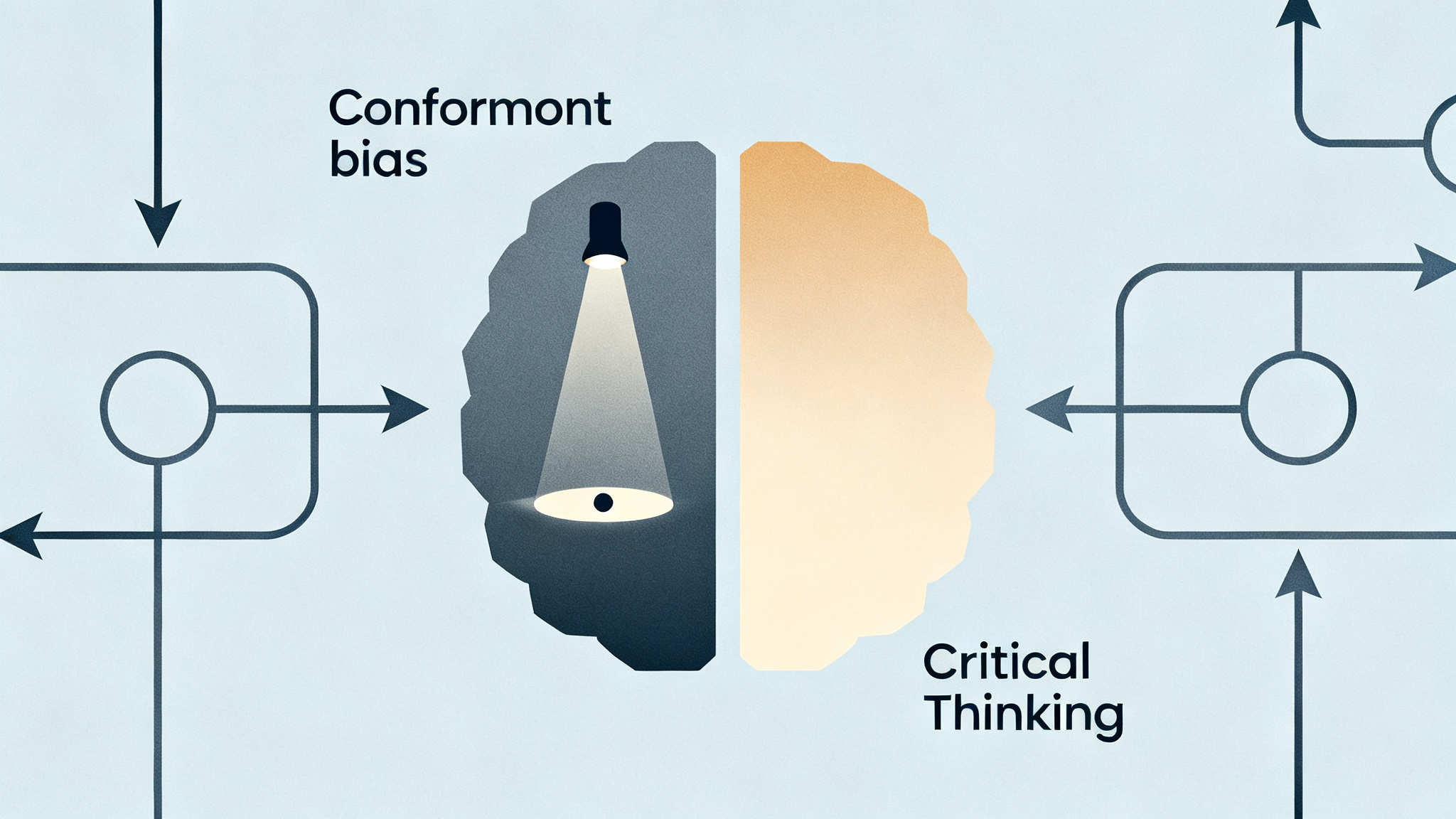
Social pressure pushes you to accept ideas just because everyone else seems to believe them. This happens at work, with friends, and online too.
You might feel awkward disagreeing with your group. Sometimes you even worry about getting left out if you speak up.
The urge to fit in can nudge you to ignore evidence that challenges the group’s opinion. Your brain craves belonging, so it’ll sometimes accept claims without much thought.
It’s even harder when you respect or want to impress the people in the group. That’s just human nature, right?
Try reminding yourself that popular beliefs aren’t always right. History is full of examples where everyone was wrong.
Ask yourself whether you’d believe something if you heard it alone, without the group’s influence. That question can be surprisingly helpful.
Practice sharing your honest thoughts, even if they’re not what others expect. It’s easier to start with low-stakes situations.
Seek out people who actually value independent thinking. You want folks who won’t judge you for questioning the usual story.
Recognizing and addressing these critical thinking pitfalls helps you approach situations more rationally.
Identifying Wishful Thinking
Wishful thinking pops up when you believe something just because you want it to be true, not because the evidence says so. Your emotions kind of take the wheel and push logic to the backseat.
You might latch onto claims that feel good and ignore uncomfortable facts. It’s easy to accept what you want to hear and tune out anything that makes you uneasy.
This kind of thinking sneaks in when you overlook warning signs in relationships, investments, or even health stuff. You end up zeroing in on info that backs up your hopes.
Meanwhile, your brain quietly filters out anything that might threaten the outcome you want. It’s sneaky how it works—you barely notice it happening.
If you want to catch yourself in the act, try asking what you honestly want to be true about a situation. Then, look at what the actual evidence says.
Jot both answers down and see if there’s a gap between your hopes and reality. Sometimes just seeing it on paper can be a wake-up call.
You can also test your beliefs by picturing the opposite outcome. If that idea makes you squirm, maybe your wishes are calling the shots.
Think about what advice you’d give a friend facing the same thing. It’s funny how much clearer things look when you’re not emotionally tangled up in them.