
When people face ethical dilemmas, they bounce between two pathways to moral judgment. Moral intuition involves immediate, instinctive feelings or gut reactions when confronted with ethical situations. Moral reasoning, on the other hand, means sitting down with the problem and analyzing it step by step.
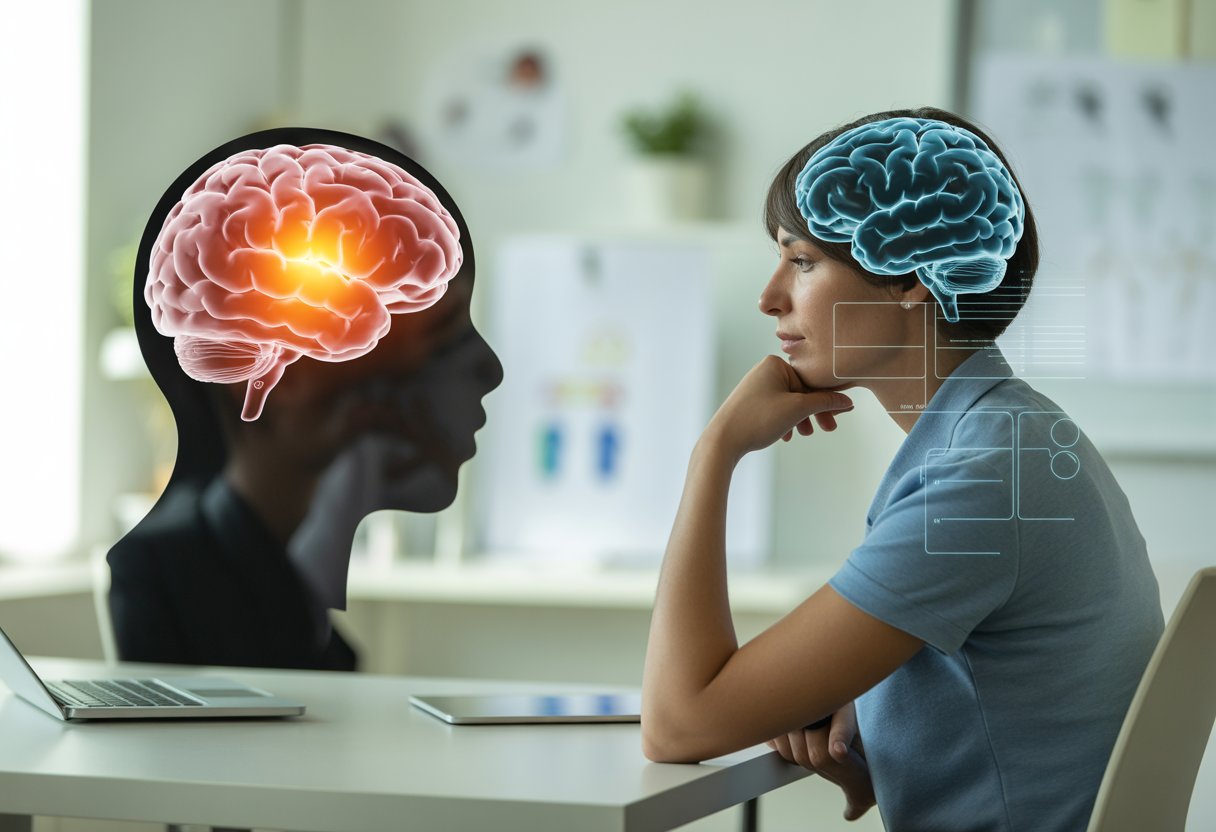
Most people get hit with moral intuitions first. Then, they use reasoning to either back up or challenge those gut-level reactions.
This mix of quick feelings and slow thinking makes human morality a tangled thing. We jump to emotional judgments, but our brains also try to slow down and think things through.
Studies examining over 1,200 research papers on moral psychology suggest that understanding ethics means looking at both our snap reactions and our careful justifications.
Some philosophers think our moral intuitions are reliable because they’re built into us. Others argue that only careful reasoning leads to truly ethical choices.
This debate shapes how we think about right and wrong, both in our own lives and in society.
Key Takeaways
- People usually feel an immediate emotional reaction to a moral situation before thinking it over.
- Both gut feelings and logical thinking shape ethical decisions, each bringing their own strengths and weaknesses.
- The mix of intuition and reasoning changes from person to person and situation to situation, affecting how societies build their ethical rules.
Defining Moral Intuition and Moral Reasoning

People judge right and wrong using two main tracks: fast emotional reactions and slower, more careful thinking.
They don’t work the same way, and they shape our beliefs differently.
What Is Moral Intuition?
Moral intuition refers to immediate, instinctive feelings that just pop up when someone faces an ethical problem.
These gut reactions show up without any conscious effort. You just know, or at least you feel like you do.
Instant moral responses come from deep inside—shaped by what we’ve lived through. Maybe you just feel that lying is wrong, no need to spell out why.
These feelings show up fast, and they usually feel pretty certain.
Culture has a big hand in shaping these reactions. Growing up somewhere, you soak up the values around you, and your intuitions start to match.
This process skips over analysis entirely.
Emotions power moral intuition more than logic ever could. If you see someone get treated unfairly, you might feel a jolt of wrongness before you can say why.
These reactions feel obvious, natural—like they couldn’t be any other way.
Sometimes, your gut feeling and your logical mind don’t agree. Intuition is the brain’s shortcut system for ethics, leaning on what it’s learned and how it feels.
What Is Moral Reasoning?
Moral reasoning involves deliberate, analytical processes. Here, people use logic and principles to pick apart ethical dilemmas.
This takes effort. You have to think it through.
People working through a moral problem with reasoning go step by step. They look at outcomes, apply rules, weigh the pros and cons before landing on a decision.
It takes time and mental energy—no shortcuts here.
Logical consistency is the goal. Maybe you ask yourself, “Am I treating others the way I’d want to be treated?” You want your moral rules to hold up across the board.
Reasoning means comparing different ethical ideas. You might wonder if something maximizes happiness, respects rights, or fulfills a duty.
You weigh these things out, sometimes for a while.
Abstract thinking is key. Instead of going with your gut, you imagine scenarios and try to apply universal rules.
You build arguments you hope others could agree with—or at least understand.
Key Differences and Overlaps
Speed is the big divider here. Intuition fires instantly, while reasoning takes its sweet time.
Processing methods really split the two:
| Moral Intuition | Moral Reasoning |
|---|---|
| Automatic and fast | Deliberate and slow |
| Emotion-driven | Logic-driven |
| Feels certain | Open to revision |
| Context-dependent | Seeks universality |
The mental state feels different too. Intuitive judgments just feel right, no explanation needed. Reasoned conclusions feel justified, but you know they could be challenged.
Both approaches actually work together in ethical decision-making. Intuition gives you the first hint. Reasoning lets you dig deeper.
Moral beliefs usually come from this back-and-forth. Maybe you feel cheating is wrong, then reason out why honesty matters.
The combination makes your judgment stronger.
Culture and personality shape both tracks in their own ways. Intuition soaks up social values, while reasoning might push back on them.
The Psychology of Moral Judgment
When someone faces a moral choice, their mind juggles fast feelings and slow thinking. Recent research in moral psychology says moral judgments come from both snap reactions and more careful reasoning.
How Intuitions Shape Moral Decisions
Moral intuitions act like shortcuts, letting people make quick calls on right and wrong. These feelings show up out of nowhere, with no clear mental steps.
Psychologist Jonathan Haidt calls moral intuition “the sudden appearance in consciousness of moral judgment, including affective valence (good-bad, like-dislike) without any conscious awareness of having gone through steps of search, weighing evidence or inferring a conclusion.”
Most of us feel these responses within milliseconds of seeing a moral problem. The brain handles the first pass automatically, before we even notice.
Key features of moral intuitions:
- Speed: Instant
- Emotion: Strong feelings attached
- Certainty: Feels obviously right or wrong
- Universality: Shows up in different cultures
People usually stick with their first impression, even if someone argues against it. It’s hard to shake that gut feeling.
Role of Emotions in Ethical Dilemmas
Emotions drive how people handle moral dilemmas. Brain imaging studies show moral judgments light up emotional parts of the brain more than logical ones.
Different feelings push people in different directions. Disgust makes us judge harshly. Empathy nudges us to help. Fear can make us toss principles out the window in a pinch.
Patients with damaged emotional brain regions make choices that seem odd to most people. They might pick the outcome that helps the most people, even if it feels wrong.
Common emotional responses in moral situations:
- Guilt: Pushes people to fix what they did
- Anger: Fuels punishment
- Compassion: Inspires helping
- Pride: Reinforces good behavior
These emotions make certain choices feel urgent or obvious. Sometimes, our happiness depends on matching our actions to these emotional signals.
Cognitive Processes in Moral Evaluation
Emotions might kick things off, but cognitive processes help us check and refine our judgments. The psychology of moral reasoning involves a handful of mental tools.
People use different types of reasoning on moral problems. They think about what could happen, follow rules, judge character, and weigh values.
Mental processes in moral evaluation:
| Process | Description | Example |
|---|---|---|
| Consequential thinking | Weighing outcomes | Who gets helped or harmed? |
| Rule application | Following moral principles | “Never lie” or “Always keep promises” |
| Character assessment | Judging moral traits | “What would a good person do?” |
| Value balancing | Comparing competing goods | Freedom vs. safety |
Sometimes, these processes clash with our first feelings. If reasoning and intuition disagree, we end up stuck or stressed.
The mix of automatic intuition and controlled reasoning makes ethical decision-making a messy, very human process. Research spanning decades of moral psychology studies shows both systems matter.
Theories of Moral Development
Psychologists have built a few main theories to explain how people pick up their moral values and reasoning skills. Some focus on stages everyone goes through, while others say culture and environment matter more.
Lawrence Kohlberg and Stages of Moral Growth
Lawrence Kohlberg put together one of the best-known theories in moral development. His research found that moral reasoning develops in predictable stages as kids grow up.
Kohlberg laid out six stages, grouped into three big levels:
Preconventional Level (Ages 4-10)
- Stage 1: Avoiding punishment
- Stage 2: Self-interest and rewards
Conventional Level (Ages 10-13)
- Stage 3: Good relationships and approval
- Stage 4: Law and order orientation
Postconventional Level (Age 13+)
- Stage 5: Social contract and individual rights
- Stage 6: Universal ethical principles
Kohlberg believed people learn moral values by thinking things through. Each stage builds on the last, and you can’t skip ahead.
He argued that moral development looks the same everywhere, across cultures. This idea shaped a lot of later research.
Carol Gilligan’s Critique and Alternative Model
Carol Gilligan pushed back on Kohlberg’s theory, pointing out it leaned too much on male subjects and missed how women reason about morality.
She offered two main moral orientations:
Justice Orientation
- Focuses on rights and rules
- Uses abstract principles
- Shows up more in males
Care Orientation
- Focuses on relationships and responsibilities
- Puts context first
- Shows up more in females
Gilligan found women often care more about keeping relationships healthy and helping others. Men, she said, lean toward justice and individual rights.
Her work broadened the picture, showing gender changes how people handle ethical dilemmas.
Influence of Culture and Environment
Culture shapes moral development in a big way. What’s right or wrong depends on where and how you grow up.
Studies show moral norms shift with culture:
- Individualistic cultures stress personal rights and independence.
- Collectivistic cultures value group harmony and social duties.
- Religious communities often ground morality in spiritual teachings.
- Secular societies might lean on philosophy instead.
Family, school, and friends also help shape moral growth. What you pick up at home or in your community leaves a mark.
Cultural context changes which moral principles matter most. Some cultures prize loyalty and authority. Others put fairness and equality above all.
These differences challenge the idea that everyone develops morals the same way. It looks like both nature and nurture are at play.
Philosophical Perspectives on Intuition and Reasoning
Philosophers have gone back and forth for centuries over whether we get moral knowledge by thinking hard or by just knowing. Virtue ethics puts practical wisdom at the center, blending feeling and thinking, while other schools split them apart.
Virtue Ethics and Practical Wisdom
Aristotle’s framework mixes intuition and reasoning through practical wisdom (phronesis). He saw moral virtue as needing both gut reactions and rational judgment.
Practical wisdom means:
- Spotting moral situations fast
- Knowing which virtues fit the moment
- Picking the right action for the context
Aristotle’s ethics says moral psychology works best when reason and intuition team up. Someone with practical wisdom builds solid moral instincts by reflecting on experience.
This isn’t pure logic or just going with your feelings. The virtuous person doesn’t run a calculation every time—they’ve trained their instincts through reason and practice.
Their gut feelings get more trustworthy as they learn and grow.
Consequentialism vs. Deontology
These two big approaches to normative ethics handle the intuition-reasoning debate in their own ways. Utilitarians usually lean on calculation and analysis when making moral decisions.
Utilitarian reasoning process:
- Identify everyone affected
- Calculate possible outcomes
They weigh benefits against harms. In the end, they pick the action with the best overall results.
Kantians, on the other hand, focus on duty and universal principles instead of consequences. They think you can discover moral rules by reflecting on what could become universal laws.
Deontological approach:
- Apply categorical imperatives
- Consider whether actions respect human dignity
They stick with moral duties, no matter the outcome. Both schools generally put reasoning above intuition.
Still, they admit people often have instant moral reactions that just happen to line up with their philosophical views.
Reflective Equilibrium in Ethics
This method, developed by John Rawls, tries to balance gut moral judgments with reasoned principles. The process moves back and forth between immediate reactions and systematic thinking.
The equilibrium process includes:
- Start with initial moral intuitions
- Formulate general principles
Next, test those principles against specific cases. If things don’t fit, revise either your intuitions or your principles.
When moral intuitions clash with reasoned principles, reflective equilibrium says neither should just win by default. Both deserve a fair shot in reaching stable moral positions.
Pure reasoning can miss important insights, but unreflective intuitions can be biased or inconsistent. The whole idea is to find coherence between emotional responses and rational analysis.
Experimental Philosophy and Empirical Research
Modern researchers use scientific methods to test old beliefs about moral thinking. Experimental moral philosophy studies moral intuitions, judgments, and behaviors through experiments instead of just theory.
Empirical Observation in Moral Theory
Empirical observation has shaped moral theory for centuries. The Persian emperor Darius ran early cross-cultural moral experiments by asking Greeks and Indians about their burial customs.
This showed big differences in moral practices. Greeks refused to eat their dead fathers, no matter the offer. Indians were horrified at burning their deceased parents.
Contemporary experimental philosophy kicked off with Stephen Stich, Shaun Nichols, and Jonathan Weinberg in 2001. Joshua Knobe’s 2003 work also got the field moving.
Key research methods include:
- Randomized controlled experiments
- Cross-cultural surveys
Researchers also use brain imaging studies and behavioral observations. These tools help test whether philosophical claims match real human behavior.
For example, they can check if people actually share the moral intuitions that philosophers assume are universal.
Role of Experimental Moral Philosophy
Experimental moral philosophy uses data to support, challenge, or update philosophical theories. It kind of bridges the gap between abstract moral theory and human psychology.
Researchers run direct experiments that test specific philosophical claims. For instance, they might ask if people really believe it’s wrong to imprison innocent folks to prevent riots.
Indirect experiments look at the nature of moral judgment itself. These studies track which brain areas light up during moral decisions and how kids develop empathy.
The field splits into three main areas:
- Experimental applied ethics – How should self-driving cars handle moral dilemmas?
- Experimental normative ethics – What makes actions right or wrong?
- Experimental metaethics – Are moral facts objective or subjective?
This approach pushes back on philosophers who try to derive moral principles through pure reasoning. It shows that human psychology actually matters for moral theory.
Influence of Empirical Research on Ethical Debates
Empirical research has changed how philosophers approach moral questions. Studies show that moral judgments often come from quick emotional responses, not careful reasoning.
Brain scans reveal that different moral dilemmas trigger different neural networks. Personal dilemmas light up emotional brain areas. Abstract problems engage logical reasoning centers.
This evidence backs up dual-process theories of moral judgment:
| System 1 (Intuitive) | System 2 (Reasoning) |
|---|---|
| Fast, automatic responses | Slow, deliberate thinking |
| Emotion-based judgments | Logic-based analysis |
| Immediate moral reactions | Careful ethical reasoning |
Cross-cultural studies challenge the idea of universal moral principles. Societies have different moral priorities around harm, fairness, loyalty, authority, and purity.
Research on over 1,200 empirical studies from 1940-2017 shows growing interest in moral psychology. This work shapes debates about criminal justice, medical ethics, and artificial intelligence.
Both intuition and reasoning play crucial roles in moral judgment. You can’t really separate one from the other.
Contemporary Debates: Disagreement, Relativism, and Objectivity
Modern philosophers wrestle with whether moral truths exist outside of human beliefs and cultures. These debates revolve around how to interpret widespread moral disagreement and whether ethical claims can be objectively true or false.
Moral Disagreement and Cultural Relativism
Moral disagreement pops up across cultures and societies on issues like the death penalty, abortion, and euthanasia. Anthropologists have documented practices like infanticide and geronticide in some places that others find shocking.
Cultural relativism says moral truths depend on cultural context. What’s right in one society might not be in another, thanks to different standards and practices.
Arguments from moral disagreement suggest that ongoing ethical conflicts mean there aren’t any objective moral truths. If there were, you’d expect us to agree more over time, right?
Critics push back, saying many disagreements come from:
- Different beliefs about consequences
- Self-interest and bias
Others point to lack of reflection or religious constraints on reasoning. Some disagreements might just be surface-level. Societies with different views on polygamy may actually be applying shared principles to different situations.
Cognitivism and Non-Cognitivism
Cognitivism says moral statements can be true or false and express real beliefs about reality. If someone says “murder is wrong,” they’re making a claim you can evaluate.
Non-cognitivism disagrees. It says moral statements express attitudes, emotions, or desires—not beliefs. So “murder is wrong” just shows disapproval.
This shapes how philosophers see moral disagreement:
| Cognitivist View | Non-Cognitivist View |
|---|---|
| Conflicts of belief about moral facts | Clashes of attitudes or desires |
| One party must be wrong | Both parties express genuine feelings |
| Seeks truth through reasoning | Focuses on attitude alignment |
Non-cognitivists argue their view explains why moral disagreements get so emotional. People care about ethics because they’re expressing deep attitudes.
Cognitivists say this misses the objective feel of moral reasoning. When we debate ethics, it sure feels like there’s a right answer to find.
Objectivity and Subjectivism in Ethics
Moral objectivism claims ethical truths exist no matter what anyone believes. Murder stays wrong, even if a whole culture disagrees.
Subjectivism says moral judgments report facts about the speaker’s attitudes. If Jane says “stealing is wrong,” she just means “I disapprove of stealing.”
Simple subjectivism has a problem: it makes moral disagreement look fake. If Jane says stealing is wrong and Eric says it’s fine, they’re just reporting attitudes—both can be right, which feels odd.
Faultless disagreements try to find middle ground. Two people can truly disagree about morals while both being right by their own standards.
Assessor relativism offers another take. Moral claims have the same content for everyone, but their truth depends on who’s judging.
These metaethical positions affect how societies handle moral conflicts and whether universal human rights make any sense.
Real-World Implications and Ethical Dilemmas
The tension between moral intuition and reasoning stands out when people face tough ethical choices in medicine, law, and policy. These situations show how individuals juggle gut reactions and systematic analysis when figuring out moral responsibility.
Resolving Applied Ethical Issues
Medical professionals face clashes between moral intuitions and systematic reasoning all the time. A doctor’s instinct to save a life might run up against a patient’s right to refuse treatment.
Key Applied Ethics Scenarios:
- Abortion: Healthcare providers balance personal morals with patient autonomy
- Euthanasia: Doctors weigh compassion against professional obligations
- Resource allocation: Hospitals decide between emotional appeals and clinical rules
Emergency room doctors often lean on quick moral intuitions when triaging patients. Their gut feelings about urgency and moral standing guide their first moves.
Hospital ethics committees, though, use structured reasoning. They systematically apply moral principles to decisions about withdrawing treatment or trying experimental procedures.
Moral Intuition in Controversial Cases
Controversial ethical dilemmas show how emotional reactions shape moral judgments. Public opinion on things like capital punishment often comes from gut-level feelings, not deep analysis.
Abortion debates are a good example. Many people take strong intuitive positions before even looking at arguments about personhood or rights.
Intuition-Driven Responses:
- Instant disgust or approval
- Emotional identification with those involved
People have visceral reactions to harm or suffering. Time pressure ramps up reliance on intuitive moral thinking.
Quick decisions about controversial cases lean heavily on emotion. Legal systems try to balance this out.
Jury instructions encourage reasoned deliberation, but they know jurors naturally react emotionally to evidence.
Trolley Problem and Beyond
The famous trolley problem exposes differences between gut reactions and reasoned approaches to moral responsibility. Most people just won’t push someone off a bridge to stop a runaway trolley, even if it would save five lives.
This shows how moral intuitions about causing harm can outweigh calculations about overall consequences. The emotional impact of personally causing a death often trumps mathematical reasoning.
Variations highlight different tensions:
- Fat man variant: Direct action feels worse, even with the same outcome
- Loop track version: Physical contact changes gut responses
- Remote switch: More distance, less emotional resistance
These thought experiments reveal that moral obligations feel different when you imagine yourself as the direct agent versus a distant decision-maker.
Emergency responders face similar dilemmas during disasters. They have to choose which victims to help first, balancing systematic triage with emotional impulses to help those who seem most sympathetic.
Frequently Asked Questions
People wonder how their gut feelings shape ethical choices, and whether logical thinking can really change those instant reactions. The mix of emotions and reasoning in moral decisions affects everything from personal choices to cultural clashes.
How do moral intuitions influence our ethical decision-making processes?
Moral intuitions give instant responses to ethical situations, before people even have time to think. These gut feelings act as the first filter for right and wrong.
Research shows that moral intuitions usually come before moral reasoning. People feel something’s wrong before they can explain why.
The brain makes quick moral judgments based on emotion and past experience. Folks rely on these instant reactions when time is tight or the choice seems simple.
Someone might just feel disgusted by cheating, without listing reasons. These snap responses come from personal experience, culture, and social conditioning.
They help us navigate everyday ethics quickly and (usually) efficiently.
Can moral reasoning always override intuitive moral responses?
Moral reasoning can’t always override strong gut responses, especially when emotions run high. People often use logic to back up their feelings, not change them.
Cognitive effort is needed for reasoning to challenge first impressions. This takes time and energy, which isn’t always available.
Strong emotions can make it tough for logic to change someone’s mind. A person might know their reaction was irrational, but still feel the same way.
Still, reasoning can sometimes override intuition. When folks take time to consider different views and consequences, they might actually change their minds.
It really depends on how strong the emotion is and whether someone’s willing to think things through.
What role does cognitive psychology play in understanding the interplay between moral intuition and moral reasoning?
Cognitive psychology digs into how our brains process ethical stuff, using both automatic and controlled thinking. Scientists track which brain regions light up during moral decisions and how quickly those reactions happen.
Emotional involvement significantly influences the gap between gut feelings and slower, reasoned responses. The limbic system fires off fast emotional reactions, while the prefrontal cortex takes its time with logic and analysis.
Psychologists have found that moral intuitions kick in within milliseconds of facing an ethical dilemma. These snap judgments happen before we’re even aware of them, but they still steer our final choices.
Cognitive biases can mess with moral reasoning, too. People often think they’re being logical, but really, they might just be justifying whatever their emotions already decided.
Cognitive psychology sheds light on why some folks lean on intuition, while others prefer to break things down with careful reasoning.
To what extent are moral intuitions universal across different cultures?
Some basic moral instincts show up pretty much everywhere—like not hurting people for no reason or wanting fairness. Still, the details of these feelings can look wildly different from one place to another.
Cultural differences significantly shape moral intuition. Collectivist cultures tend to focus on community harmony, while individualistic societies push for personal rights. These values get baked into people’s automatic moral snap judgments.
Researchers have picked out several moral foundations that seem to exist everywhere, though each culture emphasizes them differently. Care, fairness, loyalty, authority, sanctity, and liberty all show up as core building blocks.
But how people actually apply these foundations? That can change a lot. What feels wrong in one country might seem normal somewhere else.
Universal moral instincts probably evolved to help humans get along in groups. Yet, cultural learning shapes how those basic tendencies actually play out in real life.
How can moral reasoning help to resolve conflicts between competing moral intuitions?
When people feel torn by clashing gut reactions to an ethical problem, systematic reasoning steps in as a tool to sort things out. Moral reasoning involves weighing evidence, principles, and consequences to try to land on a thoughtful answer.
Logical analysis can help people spot the core values behind their conflicting intuitions. Folks get a chance to check whether their emotions line up with their actual principles or long-term goals.
Reasoning lets us look at things from more than one angle and consider outcomes our first reactions might miss. Sometimes, this bigger-picture view uncovers solutions that balance competing moral concerns.
Ethical frameworks like utilitarianism, deontology, or virtue ethics offer different ways to break down tricky situations. They give people tools to work through moral conflicts step by step.
Still, reasoning alone isn’t always enough. The best moral decisions usually blend analytical thinking with those gut feelings—finding a mix that feels right and makes sense.
What are the implications of moral intuition and moral reasoning in the development of moral philosophy?
Philosophical theories really need to consider both emotional and rational sides of how people experience morality. Purely reason-based systems just don’t explain why we care so deeply about some ethical issues.
The discovery that moral intuitions typically occur before moral reasoning shakes up old ideas about how we should make ethical choices. Now, philosophers argue about whether gut feelings or logical thinking deserve the main spotlight.
Different schools of thought lean toward either intuitive or reasoning approaches to ethics. Emotivists say moral judgments are about feelings, while rationalists insist logic is what matters for ethical truth.
The psychology of moral decision-making shapes how philosophers build their theories and apply them in real life. If we understand how people actually think about right and wrong, maybe we can come up with ethical frameworks that work better.